
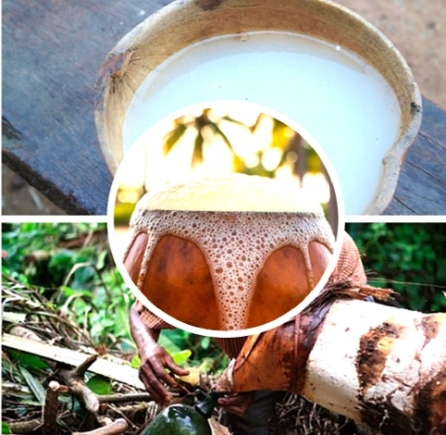
In West Africa, palm wine has been used for centuries to treat various ailments.
This traditional remedy may hold the key to fighting candidiasis, a fungal infection caused by Candida species.
Candidiasis is a significant public health concern, particularly among immunocompromised individuals, causing 1.4 million deaths annually.
It is associated with high morbidity and mortality rates (30-70%) and staggering economic burdens ($10 billion annually in the US).
Despite available antifungal therapies, treatment remains challenging due to inefficacy, toxicity or resistance.
Palm wine, rich in bioactive compounds, has emerged as a promising alternative therapy.
Its unique microbiology contributes to its fermentation and bioactive profile.
Further research is necessary to unlock palm wine’s full potential as a treatment for candidiasis.
Microbiology, bioactive compounds
Palm wine contains Saccharomyces cerevisiae, Candida spp., and Lactobacillus spp.
These microorganisms produce polyphenols and flavonoids with antifungal and antioxidant properties (Al-Alawi et al., 2017).
Its bioactive compounds, including gallic acid, catechin and quercetin, inhibit Candida species growth and disrupt cell membrane integrity, inhibit biofilm formation, and modulate the host immune response (Ogunsona et al., 2018).
It also contains additional bioactive compounds, such as protocatechucic acid, galangin, caffeic acid, and p-coumaric acid.
Its unique combination of microorganisms and bioactive compounds makes it a valuable source of natural products with potential health benefits.
Antifungal properties
Palm wine has antifungal activity against Candida species, attributed to its bioactive compounds (polyphenols and flavonoids).
These compounds inhibit Candida growth and disrupt cell membrane integrity (Amadi et al., 2014; Udebuani et al., 2016).
In vitro, studies show palm wine’s antifungal activity against C. albicans, C. tropicalis, and other Candida species.
Specific compounds like gallic acid, catechin and quercetin contribute to its antifungal properties.
Its extract shows significant antifungal activity against C. albicans in mice, reducing fungal colonisation and biofilm formation (Oguoma et al., 2017) and may serve as an alternative or adjunct therapy for candidiasis, especially for drug-resistant strains.
Mechanisms of action
Palm wine’s mechanisms against Candida species are complex and multifaceted, disrupting the Candida cell membrane and inhibiting its growth and survival likely due to bioactive compounds like flavonoids, phenolic acids and terpenoids.
It inhibits biofilm formation, a key factor in Candida pathogenesis (Amadi et al., 2014), as biofilms are communities of microorganisms that are resistant to antifungal agents. By inhibiting biofilm formation, palm wine prevents Candida infections.
Additionally, it modulates the host immune response, eliminating Candida species (Udebuani et al., 2016), likely due to compounds like polysaccharides.
Safety, toxicity considerations
Palm wine has been used safely in West Africa for centuries (Okafor et al., 1972), but toxicity studies are necessary to ensure its safe use for candidiasis treatment.
It may interact with medications like anticoagulants and antacids (Ezeagu et al., 2003).
It contains ethanol, methanol, and other volatile compounds.
While it exhibits antioxidant and anti-inflammatory activities (Al-Alawi et al., 2017), methanol raises toxicity concerns.
It Is generally safe in moderation, showing low acute toxicity (LD50 >5000 mg/kg in rats) (Okafor et al., 1972) and no significant adverse effects on liver and kidney function in rats.
However, its ethanol content may interact with liver-metabolised medications like acetaminophen and warfarin (Nwaiwu et al., 2016), so caution is advised when consuming palm wine with other medications.
Potential applications, future directions
Palm wine shows promise as a complementary therapy for candidiasis, especially in resource-limited settings (Nwaiwu et al., 2016; Santiago-Urbina et al., 2014).
Its bioactive compounds, including polyphenols, flavonoids and saponins, contribute to its antifungal and antioxidant properties (Sarkar et al., 2023; Erukainure et al., 2019). Beneficial microbes in palm wine hinder Candida growth.
Further research is needed to evaluate palm wine’s efficacy and safety, including dosage, treatment duration and interactions with conventional therapies. Identifying specific bioactive compounds and assessing safety in diverse populations are also crucial.
Conclusion
Palm wine, a traditional West African beverage, shows promise against candidiasis, a significant global health concern.
Its bioactive compounds contribute to its antifungal and antioxidant properties.
While more research is needed, palm wine may offer a valuable treatment option, especially in resource-limited settings.
Developing palm wine-based therapies could address antifungal resistance and improve health outcomes.
The writer is a naturopathic doctor.
Email:
