

Addressing post-harvest losses: Stakeholders call for deliberate investment in infrastructure
Post-harvest losses remain one of the major challenges facing the agricultural sector in Ghana.
The problem is significantly affecting productivity, farmer income, and food security.
It spans the entire value chain — from harvesting and handling to transportation, storage, to marketing, resulting in significant waste of crops that could otherwise contribute to economic growth.
Available data from the World Food Programme (WFP) and the National Food Buffer Stock Company (NAFCO) estimate that Ghana loses about US$1.9 billion worth of food annually due to post-harvest inefficiencies, nearly equivalent to the value of imported food.
For instance, highly perishable products such as vegetables, mangoes, chillies, citrus, and yam account for the majority of these losses.
Also, post-harvest losses in yam alone are estimated at approximately US$560 million annually.
These challenges persist despite significant government investment in the sector, with allocations of about GH¢13 billion, nearly half of which is lost annually due to spoilage and weak market systems.
Stakeholders’ dialogue
At a stakeholders’ forum in Tamale, the participants intimated that Ghana had not invested adequately in storage and market infrastructure to match growing production.
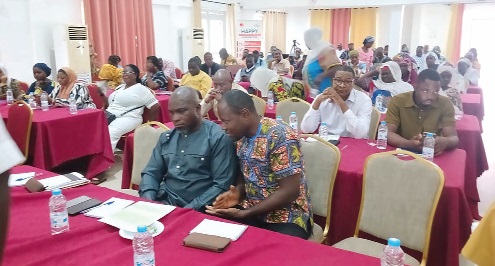
According to them, while production capacity has expanded, investments in post-harvest infrastructure, storage, value addition, and transport networks have not kept pace.
They, therefore, called for targeted investment in modern warehouses, cold-chain systems, feeder roads, and processing facilities to reduce spoilage and stabilise markets.
They warned that without such measures, production-focused investments will continue to yield limited returns.
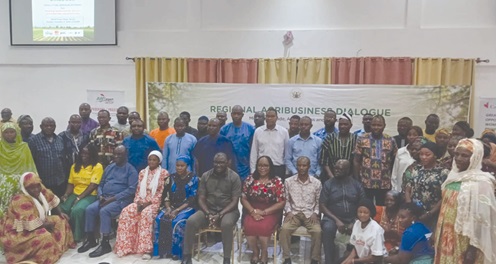
Organised by the Ministry of Trade, Agribusiness and Industry in collaboration with Agri-Impact Limited, Mastercard Foundation, Development Bank Ghana and other partners, the dialogue forms part of a nationwide consultation process that seeks to gather perspectives from industry, academia, and development partners to shape a comprehensive policy framework for agribusiness-led industrial growth.
It was on the theme “Resetting Agribusiness for Inclusive and Sustainable Industrial Growth”. Discussions focused on access to markets, trade linkages, and the structural reforms required to expand Ghana’s agribusiness competitiveness.
Sustainable approach
In his remarks, the Group Chief Executive of Agri-Impact Limited, Daniel Acquaye, noted that while recent Buffer Stock purchases help stabilise markets, a national policy requiring public institutions to patronise made-in-Ghana products was a more sustainable approach.
He also stressed the need for an Agriculture Fund to support storage, processing, and value-chain improvements.
Similarly, the Programmes Officer of AGRA, Bashiru Musah, called for warehouse expansion and road network improvements to reduce spoilage and improve market access.
Strengthen investment
The Deputy Minister for Trade, Agribusiness and Industry, Sampson Ahi, in a speech read for him by the Director of Research, Statistics and Information Management at the Ministry, George Owusu Ansah Amoah, emphasised the need to strengthen supply chains, boost underperforming factories, and align strategically with global agribusiness trends.
He said the worldwide agribusiness market was valued at US$3.4 trillion in 2024, projected to reach US$4.4–5.8 trillion by 2033, adding that the country had the opportunity to tap into this expanding market through innovation, value addition, contract farming, and sustainable agribusiness practices.
He explained that several local industries operate at only 30–40 per cent capacity due to inconsistent raw material supply, weak value chains, and persistent post-harvest losses.
To reverse this, Mr Ahi said the government was implementing key interventions such as the Feed the Industry Programme, Rapid Industrialisation Programme, and Accelerated Export Development Programme.
Boost production
The Northern Regional Minister, Ali Adolf John Northern, said agribusiness remained the backbone of the economy and that the government was making significant investment to ensure the growth of the sector.
He, therefore, called on the residents of the region to take advantage of the numerous interventions being rolled out by the government to boost production and improve their standard of living.
Writer’s email:
