
Sightsavers Ghana demands new mindset for global devt funding
The Country Director of Sightsavers Ghana, a non-governmental organisation (NGO), David Agyemang, has called for a new mindset, innovative strategies, and stronger partnerships to address the challenges of global development and funding landscape in the country.
He was hopeful that the problems notwithstanding, the country could still look towards the future with confidence, working side by side to achieve outcomes for the benefit of all.
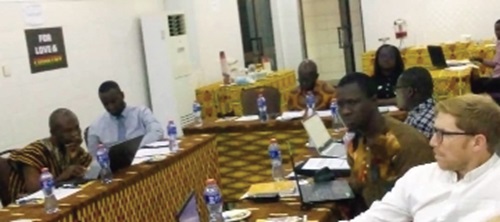
Mr Agyemang made the revelation at a stakeholders meeting on the facility assessment for Lymphatic Filariasis (LF) morbidity management and disability accessibility in Accra on Tuesday.
Main objective
The project, which is being conducted by the University for Health and Allied Sciences (UHAS) in Ho in the Volta Region and Sightsavers (Royal Commonwealth Society for the Blind), was to evaluate the feasibility of integrating service readiness and disability accessibility assessments to enhance, reduce costs and strengthen the health system in Ghana in line with World Health Organisation’s elimination strategy.
The stakeholders meeting, which was attended by medical superintendents, district directors of Ghana Health Service, Programme Manager and LF Technical officer from Accra Metro, Ashaiman, Lezokuku, Ayawaso East, Ga East, Ga South, Ga West, La Nkwantanang-Madina, Ningo-Prampram and Weija-Gbawe, was used to introduce the key partners for the project and to garner support for its successful implementation.
Sightsavers is an international NGO that works in over 30 countries in Africa and Asia to promote the rights of people with disabilities and fight avoidable blindness. The organisation has worked in Ghana since 1950 and has made a significant impact.
Mr Agyemang noted that physical accessibility is a critical issue and, when combined with health facility assessments, its importance becomes greater, adding that “we are proud to be part of this effort as it directly contributes to improving the quality of service available to the people we serve”.
Achievements
The Sightsavers Country Director mentioned the key contribution of the NGO as the elimination of trachoma in 2018, freeing over 2.8 million people from blindness, supported the Eastern Regional Health Directorate to establish five eye clinics and collaborated with the Ministry of Health to establish the Ophthalmic Nursing Training College in Korle Bu.
He said currently, Sightsavers Neglected Tropical Diseases (NTDs) - oncho and L.F. supporting distribution of ivermectin to protect over five million people in Ghana, supporting hydrocele surgeries, training of doctors in hydrocelectomy, entrepreneurship training for persons with disabilities, civil society capacity building and research, among others, were ongoing in the country, he stated.
Evaluation
The Principal Investigator and Director, Centre for Neglected Tropical Diseases Research of the University of Health and Allied Sciences, Dr Alfred Kwesi Manyeh, in his presentation, stated that the project aims to evaluate the feasibility of integrating lymphatic filariasis (LF) service readiness and disability accessibility assessment in endemic districts of Ghana.
The study’s findings, he explained, would inform policy recommendations for combining NTD and disability-inclusive health assessments.
According to Dr Manyeh, specific objectives of the project include, to assess the costs and resource requirements in performing HF and hydrocele surgeries in selected LF endemic communities in Ghana, assess the costs and resource requirements in performing HF disability accessibility assessment of primary and secondary facilities in selected LF endemic communities in Ghana, to develop an integral assessment tool by merging the HF disability accessibility and LF service readiness protocols into unified framework, to compare the efficiency (logical, economic and data quality) of the integral assessment approach versus independent toolkit operations, and finally to understand experiences (assessment teams, facility staff) in conducting integrated assessments, capturing perceived benefits, challenges and recommendations for future implementation.
A representative of the National Tropical Diseases (NTD) programme, Bright Alomatu, who gave an overview of the standalone assessment and its preliminary findings, emphasised the importance of capacity building for health workers in lymphedema management at the regional, district, sub-district, and CHPS levels. He also highlighted the training of CHPS staff and the provision of supplies to facilities to support patients, as well as the involvement of trained community volunteers.
The Former Deputy Director General of Ghana Health Service and currently with the Family Health Department of UHAS School of Medicine, Prof. Anthony Ofosu, who chaired the programme, urged all stakeholders in the project implementation to embrace it as the project seeks to address the gaps in our health system in Ghana.
